The Warning Signs
The homeowner in Lincoln Park had been noticing the door taking longer than usual on cold mornings — the opener was running for nearly three full seconds before the door started moving. That lag is a classic sign of a spring that’s losing tension. She called before it snapped, which put us in a much better position than most spring calls.
What We Found
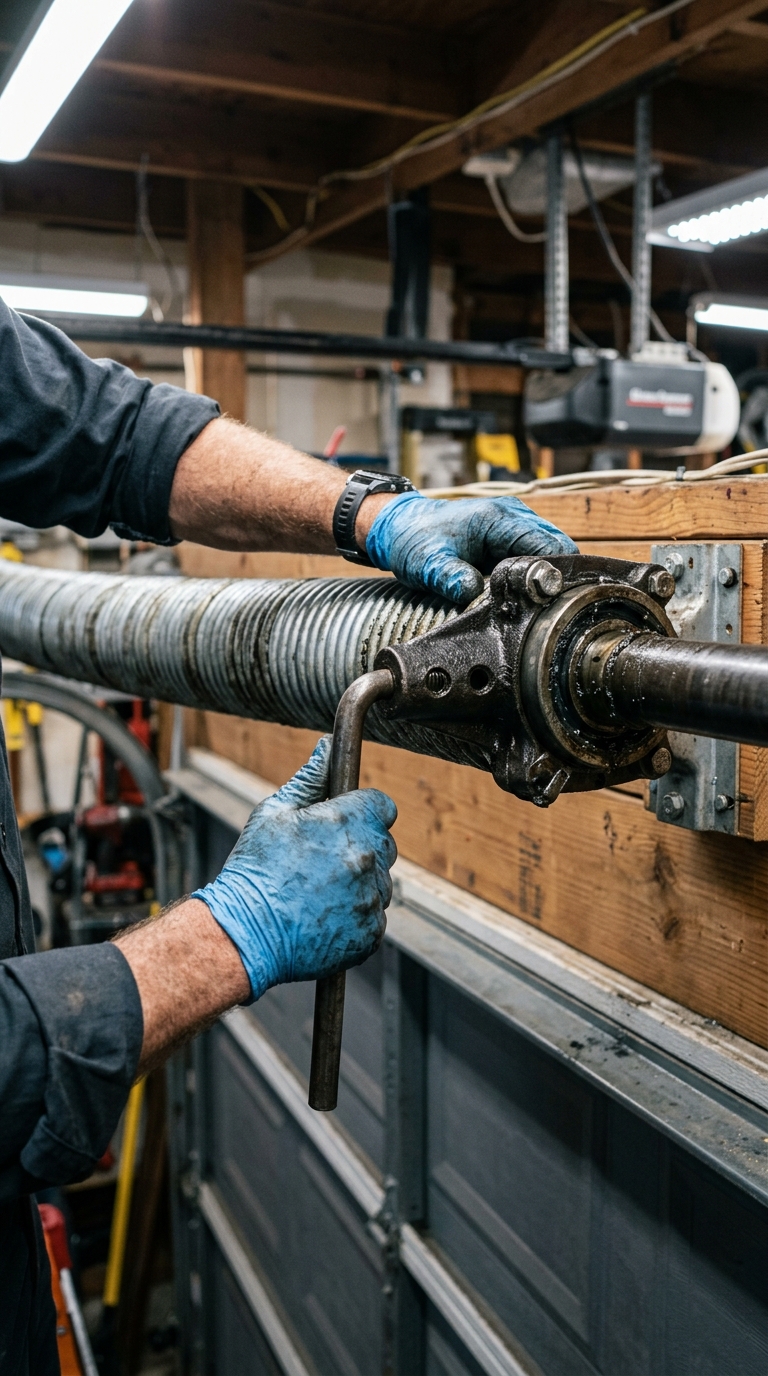
Two torsion springs on a 2-inch tube, door weight approximately 214 lbs. Both springs were original to a 2018 installation — about 7 years of Chicago winters. The left spring showed a hairline crack at the third coil from the center cone. At this stage the spring is working but has weeks, not months, remaining. The right spring showed no visible damage but measured well below rated tension when we checked torque with the winding bar.
What We Did
Released all tension from both springs before removing either. When one spring is cracked, the other still holds tension and the system remains dangerous until both are fully unwound. We pulled both springs from the tube, measured headroom clearance (3.5 inches), and matched a pair of high-cycle galvanized torsion springs rated for 25,000 cycles each. Wound to DASMA spec for the 214-lb door weight, balanced to within half an inch of float at mid-travel, tested through five full cycles.
Result
Door back in service by 9 a.m. — owner left for work on time. The opener now runs for under one second before the door moves. Warranty: lifetime on springs, 12 months on labor.