The Situation
The homeowner had backed a rented cargo van into the second section of their 16×7 door — enough force to crease and deform a single steel panel, but not enough to damage the track, the spring system, or the adjoining panels. This is the most common impact scenario we see in Chicago alley garages. The instinct is often to assume the whole door needs to go. In most cases with a recent enough door, it doesn’t.
What We Found
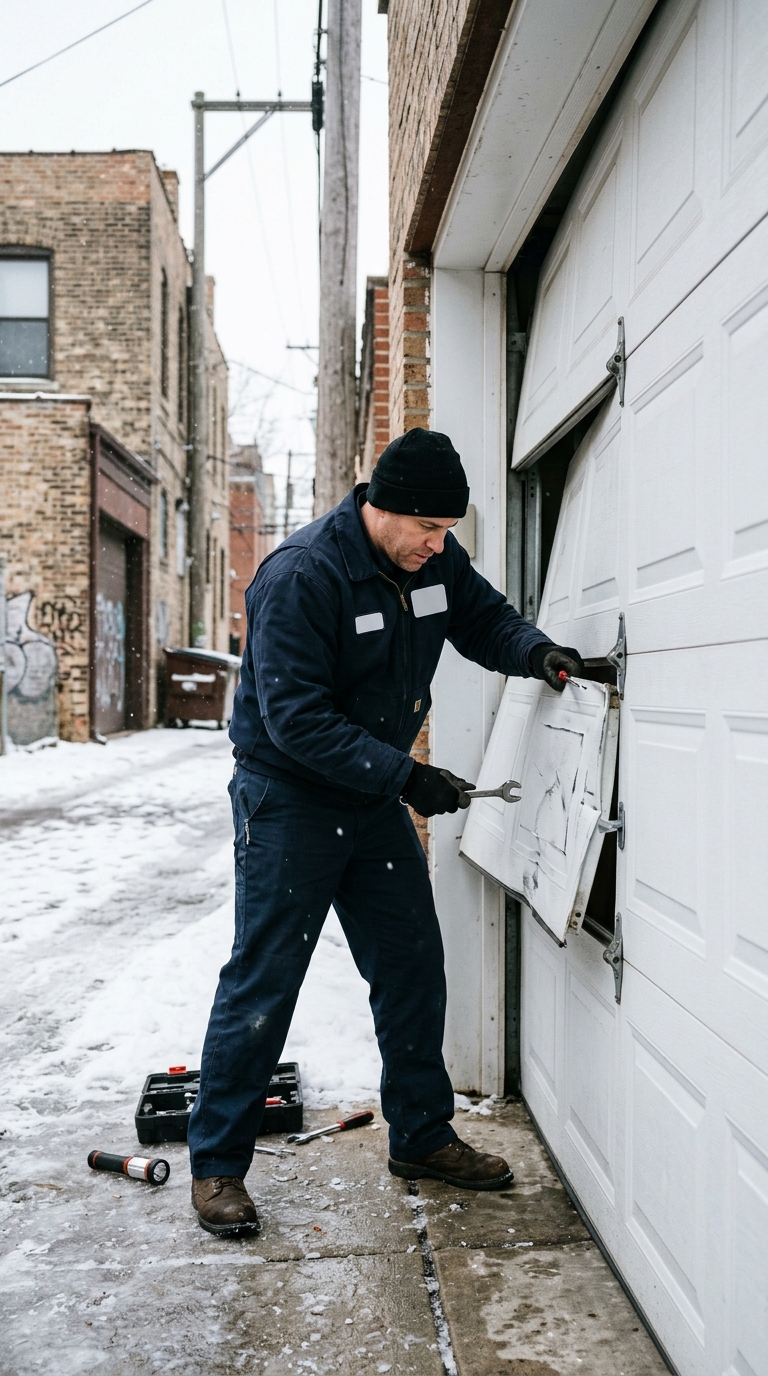
The second section from the bottom was buckled on the left side, but the hinge connections to the neighboring panels were intact. Track, spring, and cable checked out fine. The door style — a CHI Model 4251 in Desert Sand — is a current production model, which meant we could source a matching replacement section rather than a whole new door. Color and finish matches are more achievable than most people expect when the door is under ten years old; manufacturers hold dye lots across production runs for exactly this reason.
The damaged section was disconnected from the hinge hardware and removed from the track without disturbing the top or bottom sections. The new panel went in, was re-hinged, and the door was cycled and balanced. The homeowner saved over $1,700 compared to a full door replacement — a number that comes up often enough in these calls that we’ve built our assessment process around it. If the frame is straight and the door is a current model, it’s almost always a panel job.