Summer Heat Warping Chicago Garage Doors: Fixes for North Shore Homeowners
A homeowner in Wilmette called on the first 96-degree afternoon of the year. His dark-bronze steel door had run fine all spring, then it stopped flush with the floor and the top section was visibly bowed outward in the middle, like the door was trying to breathe. The opener kept grinding, then went silent and quit. Nothing had broken yet. The door was just baking, and the heat was doing exactly what heat does to a wide panel of metal sitting in direct sun.
We get a run of these calls every time Chicago stacks a few hot days back to back. People brace for garage door trouble in January, when a torsion spring snaps in a deep freeze. They do not expect the same door to act up in July. But summer heat is its own kind of stress, and on the North Shore, where a lot of homes run big insulated doors in dark colors facing west, it shows up fast.
Here is what the heat actually does to a door, the warning signs worth catching early, and the short walkthrough I run on every hot-weather service call from Evanston up through Glencoe.
What summer heat does to a garage door
A garage door is a balanced machine that lives outdoors. The springs counter the weight of the panels so the opener barely has to work. Heat changes the size and shape of nearly every part at once, and a door that glided in 50-degree weather starts asking the opener to fight friction it was never sized for. A few things go wrong together on a hot Chicago day.
The panels warp and bow. This is the one North Shore homeowners notice first. A dark-colored door facing afternoon sun can read 150 degrees or more at the skin. Steel and aluminum expand, and on an insulated door the outer skin can grow at a different rate than the foam core behind it, so the section bows outward in the middle. A warped section no longer rides the track squarely, and the door starts to catch.
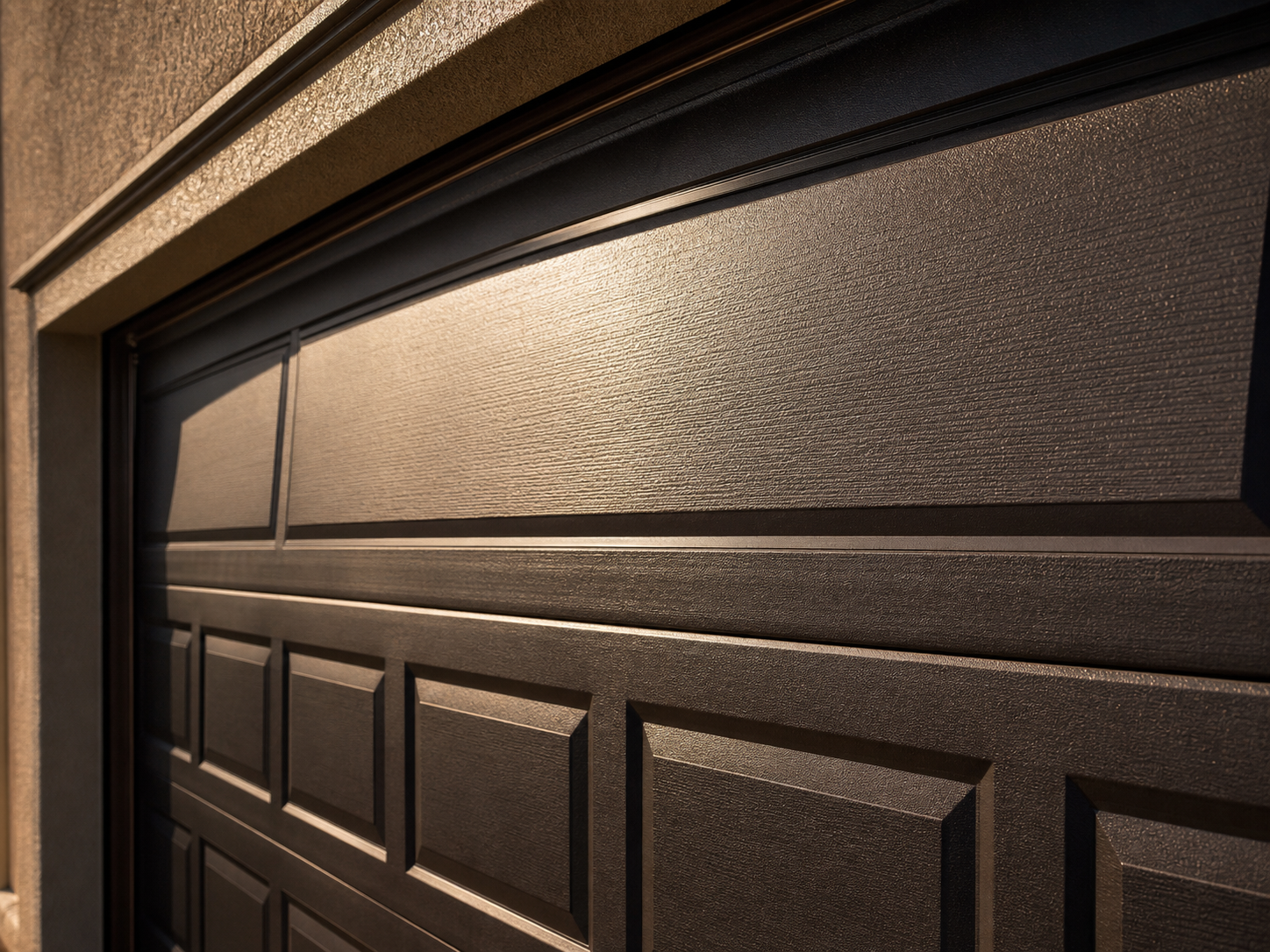
Tracks expand and pinch the rollers. The vertical and curved track is steel too. On a 95-degree afternoon a closed garage easily reads 110 or 120 inside, and the track grows just enough to tighten the clearance around the rollers. A door that cleared its track all spring now drags, especially up in the curve where the track turns horizontal.
The opener overheats and cuts out. Most openers have a thermal cutoff that shuts the motor down when it runs too hot. Add a binding door fighting friction, a few cycles in a row, and a garage already sitting at 115 degrees, and the motor trips its own protection. Homeowners read that dead opener as a failed unit when it is really the motor protecting itself from a mechanical problem and the heat.
The photo eye drifts out of line. The safety sensor near the floor hates summer. Long low evening sun pouring straight down a driveway, or heat softening the bracket it sits on, will knock the photo eye out of alignment and make the door reverse halfway down for no clear reason. The fix is usually a wipe and a small adjustment, not a new sensor.
Old lubricant breaks down. Grease that has been on a hinge or roller stem for a few summers thins out and runs in the heat, then collects dust until it works more like paste than lube. The rollers stop spinning freely and skid along the track. You hear it before you see it, a dry rasp on the way up.
A bowed section plus a straining opener is the combination to respect. If the door is visibly warped and the motor is grinding, stop running it. Forcing a warped door through an expanded track is how a tired roller stem or a worn cable turns into a real failure.
What to check before the next hot stretch
None of this needs a tech to spot. Walk out to the garage in the cool of the morning, before the sun has loaded the door, with a flashlight and a clean rag, and run through these in order. If anything feels stuck or strained, stop and call. Do not force a binding door, because a door fighting itself can hide a failing spring, and that is the one that hurts you.
- Run a balance testPull the manual release with the door closed, then lift by hand. A balanced door moves smoothly and holds at waist height on its own. If it slams down or feels like dead weight, the spring balance is off and the opener is carrying the load in the heat. That is the fastest path to an overheated motor.
- Sight the sections for bowStand to one side and look across the face of the closed door. Each section should sit flat and in plane. A panel that bulges outward in the middle is warping from the heat, and that is what makes the door catch as it travels.
- Look down the trackSight along both vertical tracks and into the curve. They should run parallel and plumb. Bent spots, a loose lag bolt, or a tight pinch point in the curve all grab the rollers worse once the steel expands.
- Spin the rollersWith the door down, flick each roller. It should spin free. A roller that drags or a worn roller stem is your sticky point, and a hot, tight track makes a tired roller skid instead of roll.
- Wipe and re-lube the moving partsClean the tracks with a dry rag, never grease the inside of the track. Then hit the hinges, roller stems, and spring coils with a garage-door-rated lubricant. Skip the WD-40, it is a cleaner, not a lube, and it makes the gummy-grease problem worse in the heat.
- Inspect the spring, cable, and drumLook for surface rust or heat scoring on the torsion spring and where the lift cable wraps the drum. Frayed cable strands mean it is time for a tech. Never touch a spring or cable under tension yourself.
- Clean and aim the photo eyeWipe both safety sensor lenses, make sure the indicator lights are steady, and nudge them until they line up. A blinking sensor light is why your door reverses halfway down on a sunny evening.
- Give the opener a rest, do not crank the forceIf the motor has cut out in the heat, let it cool before you cycle it again. The worst move is turning up the opener force setting to push a binding door through. That just lets the motor mask a mechanical problem until something breaks harder.
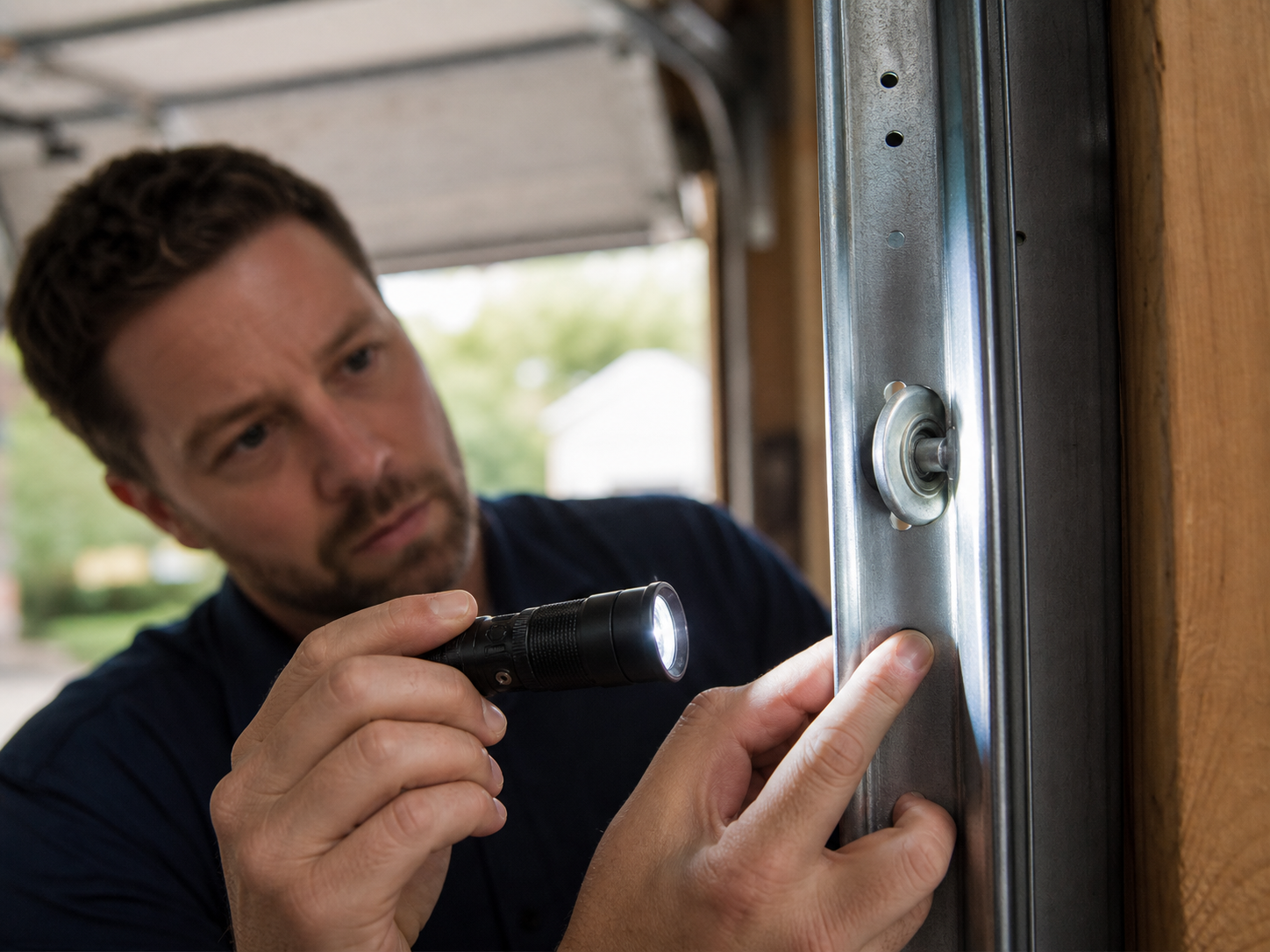
If the door passes the balance test but still drags, it is almost always friction or a warped section: a pinched track, tired rollers, or a panel that has bowed in the sun. If it fails the balance test, stop. That is spring territory, and a hot garage will not fix itself.
What this usually costs around Chicago
Most heat-season trouble is a tune-up problem, not a replacement problem. Here is what the common fixes run around Chicagoland in 2026. Prices move with the part and the size of the door, but these are honest middle-of-the-road numbers, not a sales pitch.
| Service | Typical cost |
|---|---|
| Diagnostic / service visit | $50-$95 |
| Full tune-up and re-lube | $100-$200 |
| Roller replacement (full set) | $100-$250 |
| Track realignment / adjustment | $120-$250 |
| Single section replacement | $300-$700 |
| Garage-door lubricant (DIY) | $7-$10 / can |
A tune-up before the hot months is the cheapest insurance there is. The homeowners who book us each spring almost never call in a panic in August. You can see the full breakdown on our garage door repair pricing page, and you can browse recent Chicago projects to see the kind of work a seasonal tune-up actually covers.
One more from the field
A homeowner in Skokie was sure her opener had died. Every hot afternoon the door would start up, struggle, and the motor would quit halfway. She had already priced out a new opener. When I got there the motor was fine, just heat-soaked and tripping its thermal cutoff. The real problem was a top section that had bowed in the sun and a track gone tight in the curve, so the door was dragging on every cycle. We adjusted the track, replaced two worn rollers, and the opener has not cut out since. She kept her opener and spent a fraction of what a new unit would have run.
That is the pattern with summer doors. The symptom looks dramatic, a dead opener or a door that quits in the heat, and the cause is usually a small mechanical thing the heat exposed. The freeze-thaw beating these doors take all winter in Cook County leaves them more sensitive to the swing into a hot, dry July. Catch it early and it stays cheap.
If you want a hand, this is exactly what we do all season across the North Shore. Read more about our Chicago garage door services, get to know the crew on our about Windy City Garage page, or dig into more from the Journal for the rest of our field notes.
Frequently asked questions
Why is my garage door bowed or warped in summer?
A dark-colored door facing afternoon sun can reach 150 degrees or more at the skin. The metal skin expands faster than the insulating core behind it, so an insulated section bows outward in the middle. A warped section stops riding the track squarely and starts to catch as the door travels, which is why a door that ran fine in spring can drag once the real heat arrives.
Why does my opener cut out only on hot days?
Most openers have a thermal cutoff that shuts the motor down when it runs too hot. On a hot afternoon a closed garage can sit at 115 degrees, and if the door is also binding against an expanded track, the motor works harder, overheats, and trips its own protection. Let it cool, then check for the mechanical cause, usually a tight track or a warped section, rather than assuming the opener has failed.
Can I fix a heat-sticking garage door myself?
Often the friction side of it, yes. Cleaning the tracks, wiping the photo eye lenses, and re-lubricating the hinges and roller stems with a garage-door-rated lubricant solves a lot of hot-weather binding. What you should never do yourself is touch the torsion spring or lift cable under tension, force a visibly warped door, or crank up the opener force setting to push a binding door through. Those are tech jobs.
How often should I have my North Shore garage door serviced?
A tune-up every one to two years is the right rhythm for most homes in Chicagoland, ideally in spring before the heavy summer use. Big insulated doors in dark colors and west-facing doors on the North Shore take the most heat and tend to benefit from a yearly check to stay ahead of warping, track binding, and an overworked opener.
Door warping or quitting in the heat? Let’s take a look.
We service Chicago and the North Shore across Cook, DuPage, and Lake counties. A quick inspection now beats an emergency call in August.
