A dead opener on a January morning in Lincoln Park has a way of feeling like a disaster. Most of the time it is not. Nine calls out of ten, the door is fine and the fix is small, once you know where to look.
Here is the pattern I see across the city and the North Shore every winter. The temperature drops below twenty, someone hits the wall button, and the door does nothing. Or it starts down, then reverses and climbs back up like it changed its mind. In Logan Square and Lakeview it is usually a sensor or a stiff spring. Out in the alley garages of the bungalow belt, where there is no heat and the concrete sweats, it is more often a worn part that the cold finally exposed.
This is a working checklist, in the order I run it on an actual service call. Start at the top. You will solve a good share of these before you ever pick up the phone, and if you do call us, you will know what you are paying for. If you want the short version of what we handle, it lives on our garage door opener repair page.
First, rule out the boring stuff
Before anyone touches a spring or a circuit board, confirm the opener is actually getting power and actually getting a signal. I have driven to Skokie for a “dead motor” that was a tripped outlet. It happens more than you would think.
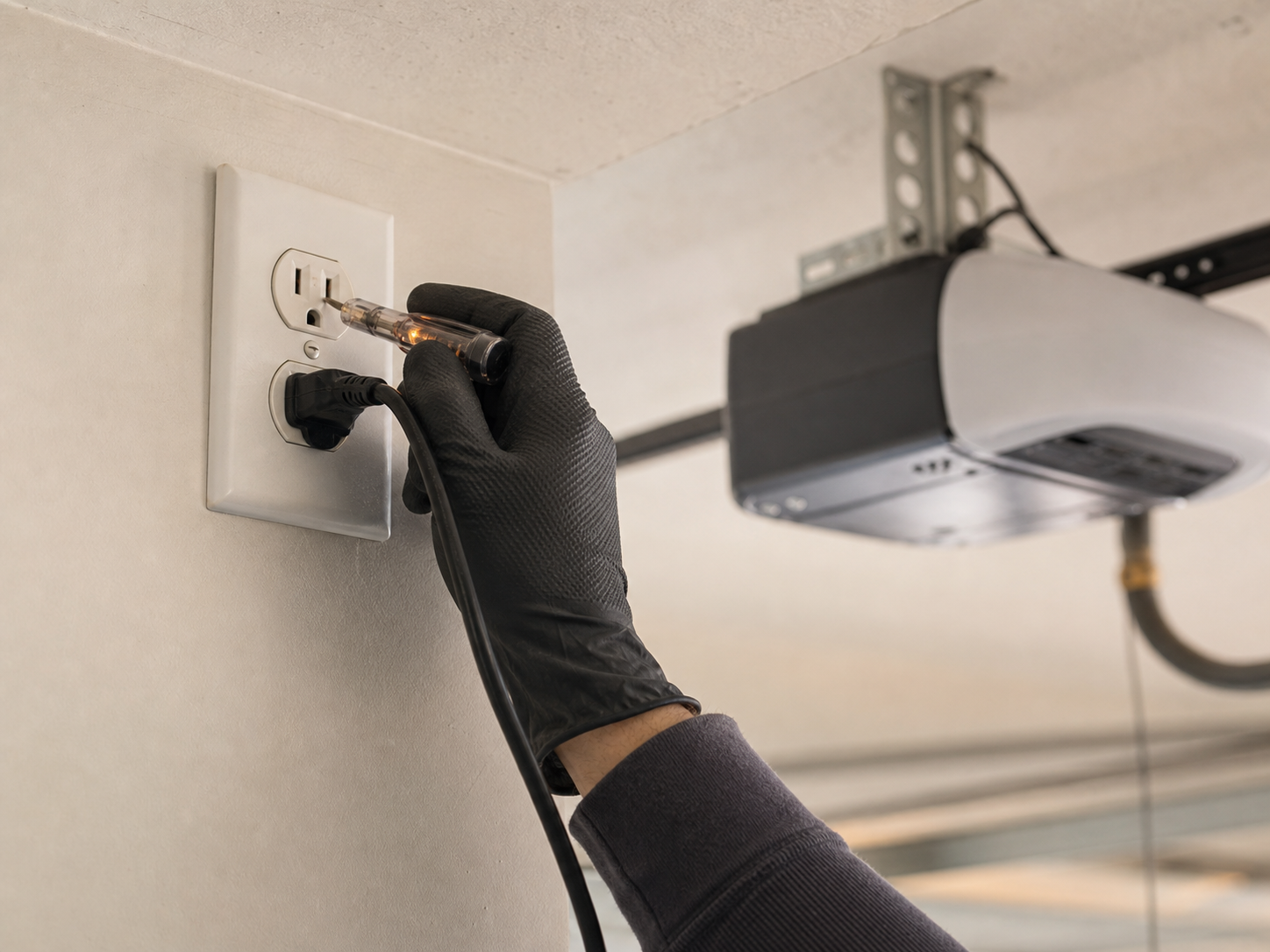
- Check the outlet. Garage outlets are often on a GFCI that trips in damp weather. Plug a phone charger into the same outlet. Nothing? Reset the GFCI, or check the breaker. Chicago winters and a wet alley floor trip these constantly.
- Try the wall button, not just the remote. If the wall button works but the remote does not, you have a remote or battery problem, not an opener problem. A key fob battery costs a couple of dollars.
- Look for a solid or blinking light on the motor head. Most units flash a code when something is wrong. A steady blink usually means the safety sensors are unhappy, which is the next thing we check.
- Pull the manual release and lift by hand. Disconnect the red emergency release cord and lift the door yourself. If it is heavy, jerky, or will not stay put at waist height, the problem is the door and the spring, not the opener. That distinction saves people hundreds.
That last step is the one homeowners skip, and it is the most useful. An opener is a small motor. It is not built to drag a door that has lost its balance. When a torsion spring weakens in the cold, the opener strains, overheats, and quits. People blame the opener. The opener was the victim.
The photo eye: the number one false alarm
If your door goes down a foot and reverses, or refuses to close at all while the light on the motor blinks, look at the two small safety sensors near the floor on each side of the opening. These are the photo eyes, and by federal rule every opener made since 1993 has them. When the beam between them breaks, or thinks it is broken, the door will not close. That is by design, so it never crushes a kid or a car bumper.
In a Chicago garage the photo eye fails for dumb, fixable reasons. A snow shovel leaning against one. A cobweb across the lens. A bracket knocked out of line when someone backed in too far. Cold weather also lets condensation fog the lens. Wipe both eyes with a dry cloth, make sure the small indicator lights on each one glow steady, and gently nudge them until they line up. A steady light on both means the beam is connected.
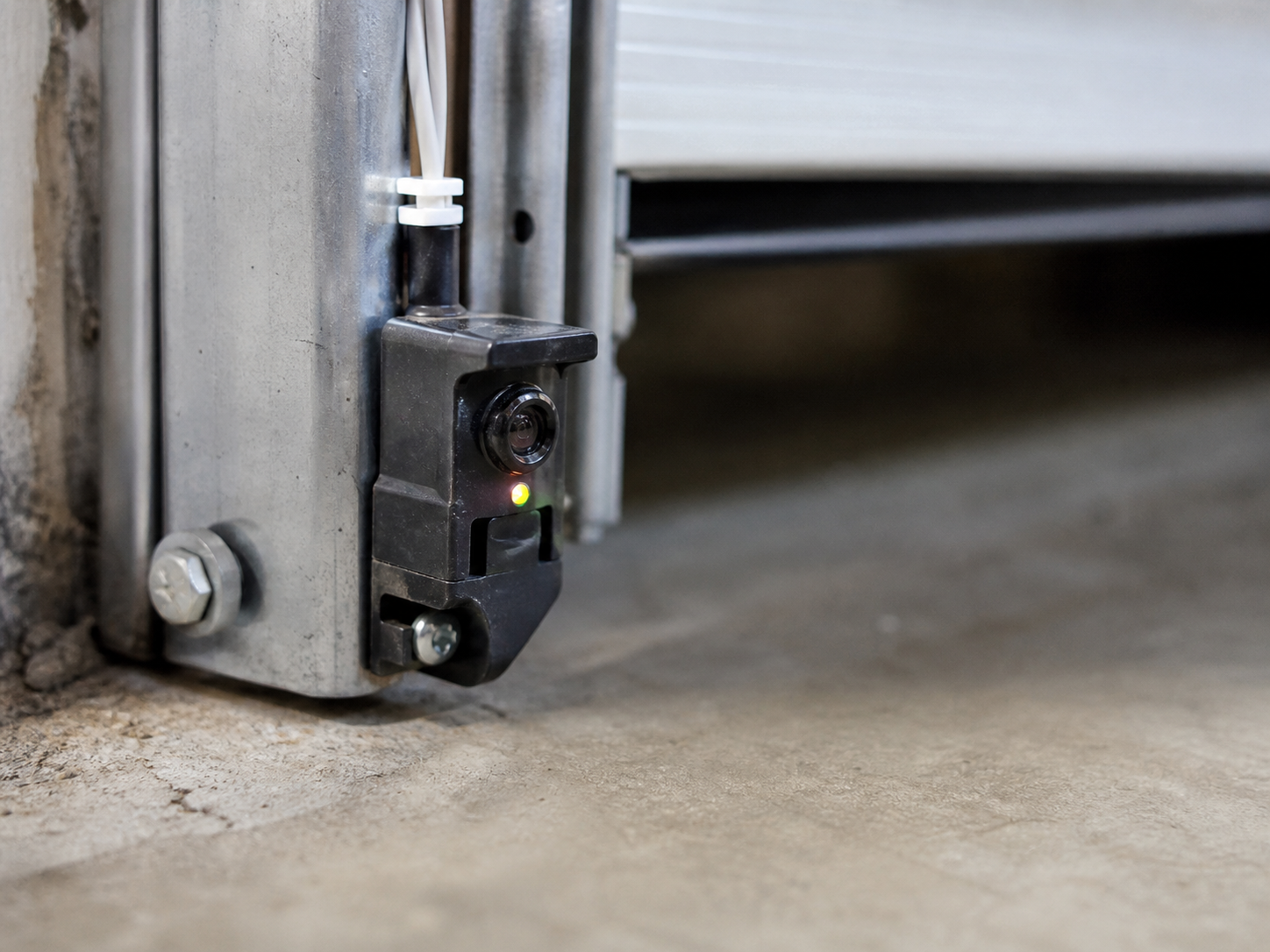
If the eyes are clean, lined up, and still not lit, the wiring or the sensor itself may be the fault. That is a quick fix for a tech, and it is worth doing right rather than defeating the safety, which I will never do and neither should you.
When it is the opener itself
Say the power is good, the door balances fine by hand, and the photo eyes are behaving. Now we are actually looking at the opener. A few things go wrong here, and the cost swings depending on which.
The capacitor
This is the most common internal failure I find, especially on units past the ten-year mark. The motor hums but the door does not move, or it moves slowly and stalls. The capacitor is the part that gives the motor its starting kick, and cold accelerates its decline. A capacitor swap is one of the cheaper repairs.
The logic board
If the opener is dead with no hum, no lights, no response from a known-good remote or the wall button, the control board may be gone. Power surges during summer storms and winter grid strain both take these out. A board is a bigger ticket, and on an older unit it starts the repair-versus-replace conversation.
The travel limits and force settings
Sometimes the opener runs but the door stops short, or slams down and bounces open. That is the travel limit or the force setting drifting out of adjustment, often after a cold snap changes how the door moves on its rollers. These are adjustment screws or buttons on the motor head, and a tech can reset them in minutes. No new parts, just calibration.
Whatever the part, the honest test is age. If the opener is under eight years old, repair it. If it is past twelve and the quote climbs over a couple hundred dollars, a new unit with a warranty and a rebuilt opener rail is usually the smarter spend. You can see how we price both paths on our garage door repair pricing page.
What this actually costs in Chicago in 2026
Prices move with the part and the neighborhood, but here is the honest range we quote across Chicagoland this year. These are installed, real numbers, not a lowball to get in the door.
| Job | Typical range |
|---|---|
| Diagnostic / service call | $90 to $130 |
| Capacitor replacement | $100 to $175 |
| Logic / control board | $150 to $350 |
| Photo eye or safety sensor | $110 to $180 |
| Travel limit / force reset | part of a $90 to $130 tune-up |
| New opener, installed | $400 to $600 |
The single biggest way to waste money is replacing the opener when the real problem was a tired torsion spring or a bottom bracket dragging the door out of balance. A good tech tests the balance first. If yours does not disconnect the manual release and lift the door by hand before quoting a new opener, get a second opinion. You can see the kind of repairs we document on our recent Chicago projects page.
Why Chicago winters are so hard on openers
An alley garage in the bungalow belt has no heat and a concrete floor that pulls moisture straight out of freeze-thaw cycles. That combination is rough on everything electric and mechanical. Grease stiffens on the opener rail. The steel of a torsion spring gets brittle and loses cycles faster. Condensation creeps into the photo eye housing and the control board. Cook County humidity swings do the rest.
None of this means your opener is doomed. It means the cold does not create new problems so much as it finds the weak ones early. A door that was slightly out of balance all summer will finally stall the motor at fifteen degrees. The fix is the same fix it always was, the winter just moved up the timeline. A yearly balance test and a shot of proper garage-door lubricant before the first freeze prevents most January panic calls. Our full list of services is on the Chicago garage door services page.
Opener still not cooperating?
We work Chicago and the North Shore, alley garages and bungalows included. Get a straight diagnosis and an honest quote, no upsell to a new opener when a part will do.
Frequently asked questions
Why does my garage door open but not close?
Almost always the safety photo eyes near the floor. If the beam between the two sensors is blocked, misaligned, or the lens is fogged, the opener refuses to close so it cannot trap anything underneath. Wipe both lenses, clear anything leaning against them, and nudge them until both indicator lights glow steady. If the lights still will not come on, the wiring or sensor needs a tech.
My opener hums but the door will not move. What is wrong?
That hum with no motion usually points to a failed capacitor, the part that gives the motor its starting torque, and cold weather speeds its failure. But test the door by hand first with the manual release. If the door is heavy or will not stay put at waist height, the real fault is a weak torsion spring straining the motor, not the opener. Fix the balance and the hum often disappears.
Should I repair or replace my garage door opener?
Age is the deciding line. Under eight years old, repair it, since parts like a capacitor or board cost far less than a new unit. Past twelve years, if the repair quote climbs over roughly two hundred dollars, a new opener installed for four to six hundred with a fresh warranty is the smarter spend. Between those ages, weigh how many other parts are worn.
Why does my garage door opener quit in cold weather?
Chicago cold does not usually break a healthy opener. It exposes the weak parts early. Grease stiffens on the opener rail, a torsion spring loses cycles as the steel goes brittle in freeze-thaw swings, and condensation fogs the photo eye. A door slightly out of balance all summer finally stalls the motor at fifteen degrees. A yearly balance test and lubrication before the first freeze prevents most of it.
Is it safe to keep using the opener after it reverses on its own?
Not for long without checking why. A door that reverses is usually the photo eye or a drifting force setting doing its job to prevent a crush injury, which is good. But never tape over the sensors or crank the force to force it shut, since that defeats the one system built to protect a child or a car. Clean and align the eyes, and if it keeps happening, have it looked at.
If you want more plain-English garage door writing from real Chicago service calls, there is more from the Journal. And when you are ready for a set of eyes on the door, we are a call away.
