If you spent the first week of July mopping storm water out of your garage, you are not alone, and it is probably not your fault. When the rain came down hard enough to push Chicago’s Deep Tunnel system toward capacity and swamp streets from Beverly to the North Shore, a lot of that water found the lowest, weakest gap it could, and on most attached garages that gap sits right under the door.
The good news is that a garage that flooded from underneath the door usually does not have a broken door. It has a tired or wrong-sized bottom seal, sometimes paired with a bent bottom bracket or an out-of-square opening. This is a small, cheap part doing a big job, and when it fails you feel it fast. Here is how to read what happened, whether you can fix it yourself this weekend, and when to have someone look at the opening itself before the next storm.
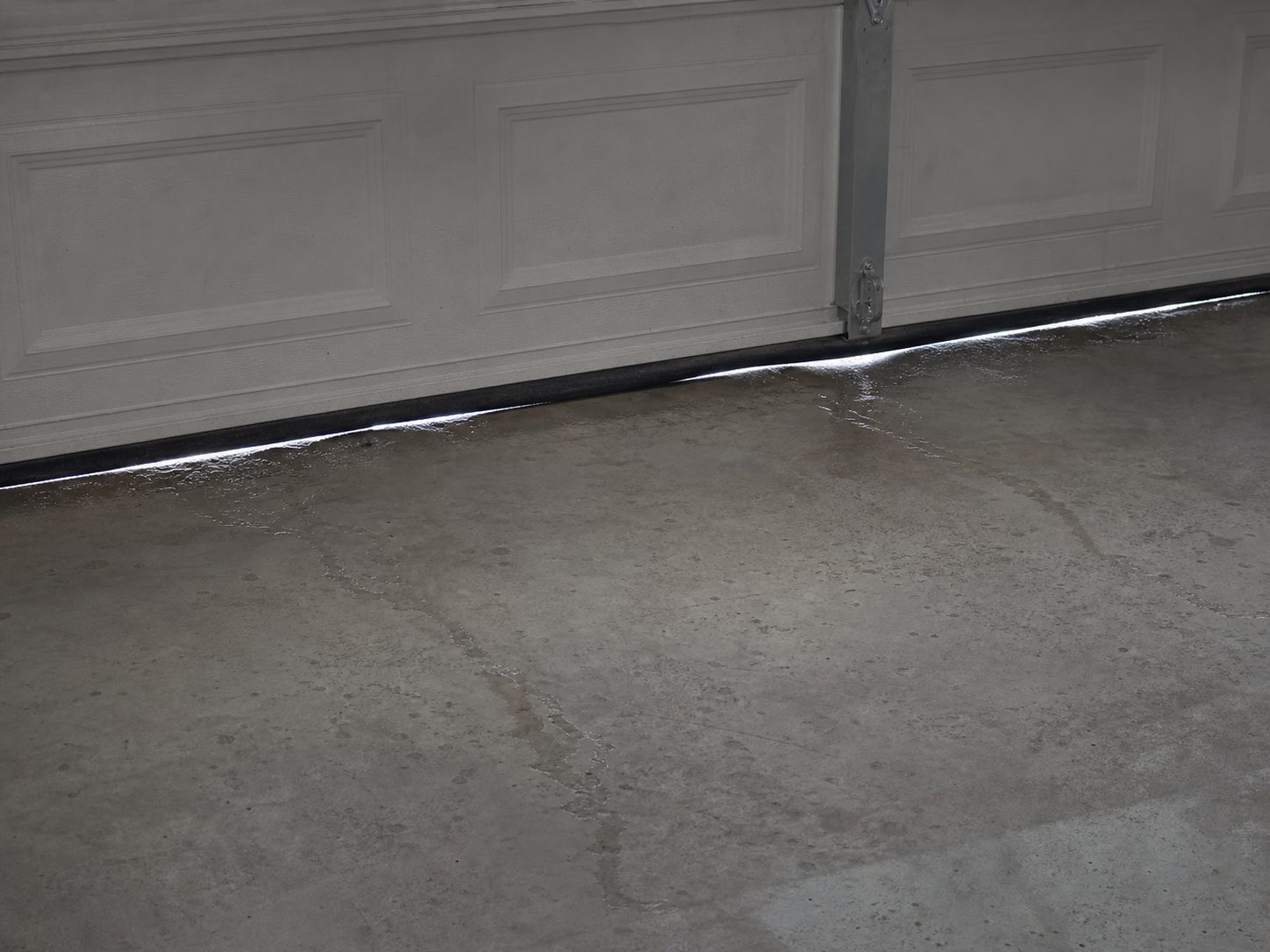
First, understand what actually failed
Why water comes in under the door, not through it
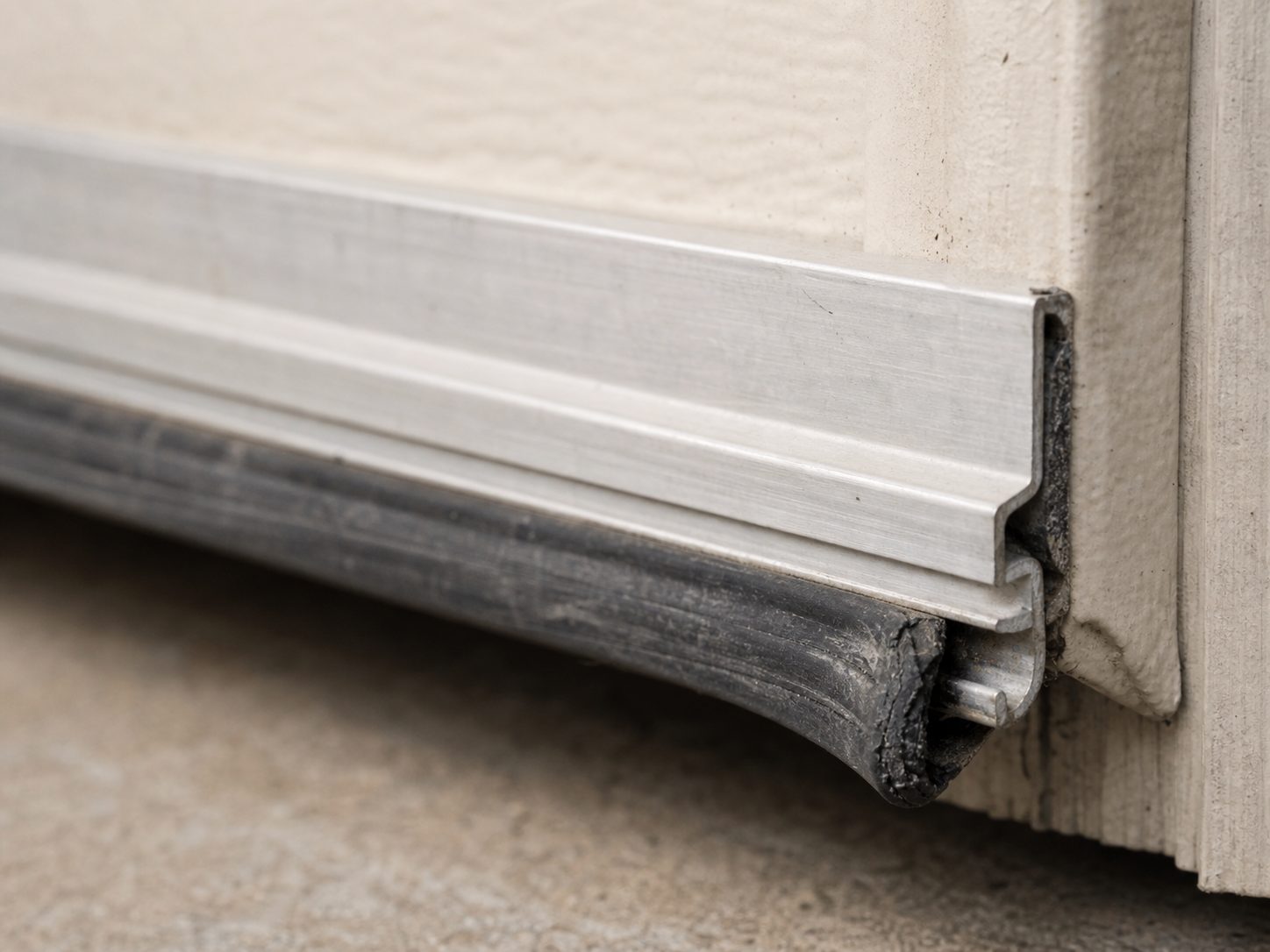
A sectional garage door is not built to be watertight the way a basement wall is. Its only defense along the floor is the weather seal, sometimes called the bottom astragal, a flexible strip of rubber or vinyl clipped into the aluminum retainer on the bottom panel. When the door is down, that seal is supposed to squish against the concrete and follow the small dips and slopes in the slab, closing the gap.
Two things fight that seal in a storm. First, water does not need a big opening. During the July rain event, streets in low-lying pockets held standing water for hours, and even a quarter-inch gap becomes a doorway when there is an inch of water sitting against it. Second, most Chicago garage slabs pitch slightly toward the door on purpose, so melt and rain drain out. That same pitch invites water back in the moment the outside water level rises faster than the slab can shed it.
So the seal is the hero and the villain here. A fresh, correctly sized seal will hold back light pooling and driving rain. A seal that has gone hard, cracked, torn at the corners, or shrunk back from the ends will let a storm walk right in. Before you blame the door, look at the strip along the bottom.
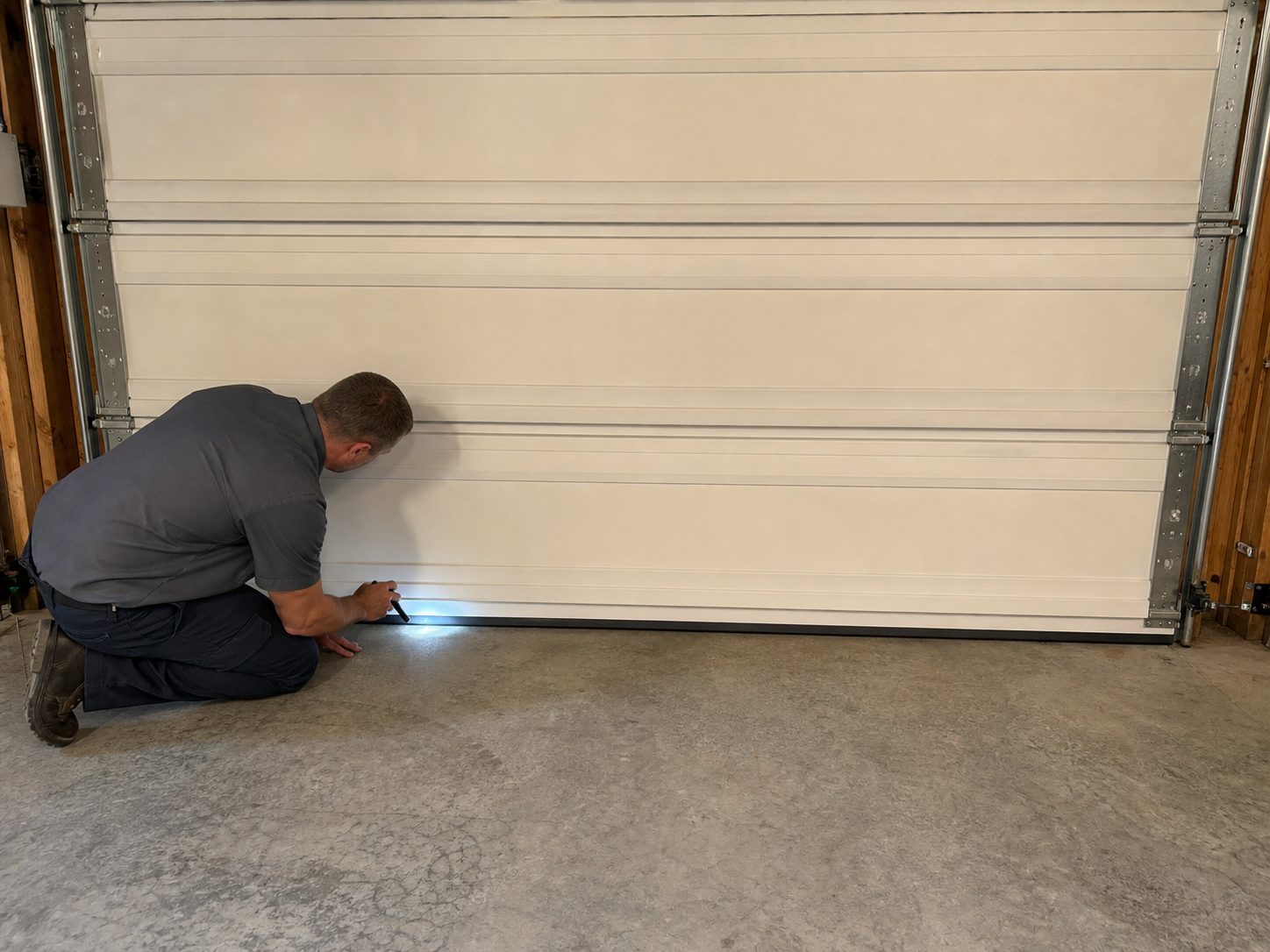
Quick read: Close the door in daylight, go inside, and look for light along the floor. Any daylight you can see is water you will get. Sunlight through the seal line is the single fastest diagnostic there is.
Diagnose before you buy
Is it the seal, the bracket, or the opening?
Bottom-seal water intrusion has three common culprits, and buying the wrong part wastes a Saturday. Work through them in order.
1. The weather seal itself
Grab the rubber and flex it. A healthy seal is soft and springs back. A failed one feels stiff like a garden hose left out all winter, or it tears when you pull a corner. Look at the ends too. Seals shrink over years of Chicago freeze-thaw, and a strip that has pulled back even half an inch leaves an open channel at each corner where water pours in first. If the retainer is fine but the rubber is shot, you only need a new seal.
2. The bottom bracket and panel
Now sight down the bottom of the door. Is the panel straight, or does it bow up in the middle or dip at one end? A tweaked bottom bracket, a warped bottom panel, or a section that got bumped by a car will hold the seal off the floor no matter how new the rubber is. This is where a lot of DIY seal swaps go wrong: the new strip is perfect, but the panel it rides on is not sitting flat.
3. The opening and the slab
Finally, look at the concrete. Older bungalow-belt and alley garages settle over decades, and the slab can slope side to side so one corner sits high and the other low. A standard flat seal cannot bridge a slab that is out of level by more than about a half inch. In those cases the fix is a taller U-shaped or T-shaped seal, or a threshold seal glued to the floor, not just a like-for-like swap.
The weekend fix
How to replace a garage door bottom seal
If your diagnosis points to the rubber and the panel is straight, this is an honest DIY job for most homeowners. Give yourself an hour, do it on a dry day, and take the old seal to the store so you match the retainer.
- Identify your retainer. Most modern doors use an aluminum channel with two grooves that hold a U-shaped or beaded vinyl seal. Older doors may have a single J-channel or a seal stapled to a wood bottom rail. Match the profile, not just the width.
- Measure the door and buy a little long. Measure the full width and buy the seal a few inches longer so you can trim it flush. Seal comes in standard bulk lengths for a reason, running short at one end is the most common mistake.
- Open the door partway and support it. Raise the door to a comfortable working height so the bottom panel is at your waist, then clamp locking pliers on the track below a roller so it cannot drift down. Never work under an unsupported door.
- Slide the old seal out. Pull the old vinyl out of one end of the retainer channel. Spray a little soapy water in the channel as a lubricant. It will drag at first, then feed out.
- Feed the new seal in. Line up the beads or the U with the two grooves and work the new seal through from one end, keeping it flat and untwisted. The soapy water helps it glide.
- Trim, close, and check for light. Trim the ends flush, lower the door, go inside, and look for daylight again. A good seal shows a clean, even shadow line with no gaps at the corners.
If you get to the light check and still see gaps at one end, that is your slab or your panel talking, not the seal. Do not force a taller seal to mask a bracket problem, because a seal jammed too hard against the floor drags, wears fast, and can throw off the door’s travel limit so the opener reverses. That is the point where a quick inspection saves you money.
Chicago-specific tip: If you are buying a seal now, size up to a taller U-shape or add a floor-mounted threshold seal. The next few summers are trending wetter, and Cook County garages that flooded in July are the ones most likely to flood again. A threshold seal glued to the slab also holds back alley runoff that a door seal alone never will.
When to call instead of buy
Signs the opening, not the seal, needs attention
Some flooding is a symptom of a door that has quietly gone out of square, and no seal on the shelf will fix that. Call for a professional look if you see any of these:
- The bottom of the door is visibly not parallel to the floor when closed, higher on one side than the other.
- You replaced the seal correctly and still see daylight or feel a draft along the same corner.
- The bottom panel is cracked, delaminated, or waterlogged from sitting in standing water.
- The door binds, hesitates, or the opener reverses when it hits the floor, which can mean a track alignment or bracket issue pushing the panel off true.
- There is rust blooming on the bottom bracket or the lift cable ends near the floor, common after cables sat in flood water.
That last point matters more than people think. A lift cable that soaked in dirty storm water can start to corrode and fray from the bottom up, and a bottom bracket is under spring tension, so it is not a part to pry on yourself. If your garage took standing water, it is worth having those checked while someone is already looking at the seal. You can see the kind of settled-slab and off-square fixes we handle on our recent Chicago projects, and our full menu of Chicago garage door services lays out what a visit covers.
Before the next storm
Keeping water out for good
Chicago is not getting drier. When the system built to hold our stormwater is running near capacity in early July, the smart move is to treat the garage floor line as flood protection, not just a draft stopper. A layered approach beats any single part.
Start with the seal, sized generously. Add a threshold seal on the slab for garages that face an alley or sit low. Regrade or add a small trench drain outside if water consistently pools against the door. And once a year, in spring after the freeze-thaw season, flex the seal, check the corners, and look for the light. Ten minutes in April can save a soaked garage in July. Homeowners who want a rough sense of what these fixes run can check our garage door repair pricing before booking anything.
None of this is exotic. A bottom seal is one of the least expensive parts on the whole door, and it is the one standing between a July downpour and everything you store on that floor. Get it right, size it for the weather we actually get, and the next near-record rain becomes a story you tell instead of a mess you clean up.
Frequently asked questions
How much does a garage door bottom seal replacement cost?
The seal itself is one of the cheapest parts on the door, typically a modest per-foot cost for the vinyl plus the retainer if yours needs replacing too. A standard single-car door uses a short length, a double a bit more. Doing it yourself keeps it low. If you add a floor-mounted threshold seal or need the bottom bracket and panel corrected because the door is out of square, the cost rises accordingly. Our pricing page gives realistic Chicago ranges so nothing surprises you.
Can I replace the bottom seal myself, or do I need a technician?
If the aluminum retainer is intact, the bottom panel is straight, and you only need new rubber, this is a reasonable weekend job for most homeowners. Support the door with locking pliers on the track, slide the old seal out, feed the new one in with a little soapy water, and check for light. Call a technician if the panel is bent, the door sits crooked when closed, or you still see gaps after a correct swap, because those point to a bracket or slab problem the seal cannot fix.
Why did water come in under my garage door during the July storm?
Sectional garage doors are not fully watertight along the floor. Their only defense is the flexible bottom seal pressed against the concrete. When Chicago’s stormwater system ran near capacity and streets held standing water for hours, even a small gap from a hardened, torn, or shrunken seal let that water push in. Slabs that pitch toward the door for drainage make it worse when outside water rises faster than the concrete can shed it. A fresh, correctly sized seal is the fix.
Will a taller or threshold seal really stop garage flooding?
It helps a great deal, especially on low-lying or alley-facing Cook County garages. A taller U-shaped weather seal bridges a slab that has settled out of level, and a threshold seal glued to the floor adds a second barrier that holds back shallow runoff a door seal alone cannot. Neither is a substitute for fixing standing-water grading outside, but layering the two is the most reliable way to keep a garage that flooded once from flooding again.
Should I worry about my cables or opener after the garage flooded?
Yes, it is worth a look. A lift cable that sat in dirty storm water can begin to corrode and fray from the bottom up, and the bottom bracket it anchors to is under spring tension, so it is not something to pry on yourself. Flood water can also leave rust on hardware near the floor. If your garage took standing water, have the cables, bottom bracket, and the opener’s floor reversal checked while someone is already replacing the seal.
Water under your door before the next storm?
We size seals for the weather Chicago actually gets and check the opening while we are there. Get an honest look before the next downpour.
