One morning the door goes up crooked. One corner hangs lower than the other, the bottom edge sits at an angle, and the opener strains like it is dragging an anchor. Nine times out of ten in a Chicago garage, that is a broken lift cable. Here is how to be sure, whether it is safe to touch, why both cables get replaced, and what the repair actually runs in Illinois.
A garage door cable is a length of aircraft-grade steel, usually about 1/8 inch thick, that runs from the bottom bracket at the corner of the door up to the drum at the top of the track. The spring does the lifting. The cables carry that lifted weight down to the door and keep both sides moving together. When one cable frays through or pops off the drum, that side loses its support and the door goes lopsided in an instant.
How to tell a cable actually broke
People often blame the opener first. But an opener problem usually leaves the door square and level, just stubborn. A cable problem shows up as a door that is no longer level with itself. Look for these signs.
- The door hangs crooked. One bottom corner is two or three inches lower than the other, and the gap along the floor is wedge shaped.
- A cable is loose or dangling. Walk into the garage and look at the vertical track on each side. A healthy cable is taut against the drum. A failed one hangs slack, coiled on the floor, or wrapped wrong around the drum.
- Fraying that looks like hair. Before a cable snaps clean it usually splays, individual strands lifting off the main line near the bottom bracket. That is your warning shot.
- The opener runs but the door barely moves, or it moves a foot and jams. The motor is fine. It has lost the balanced pull it needs.
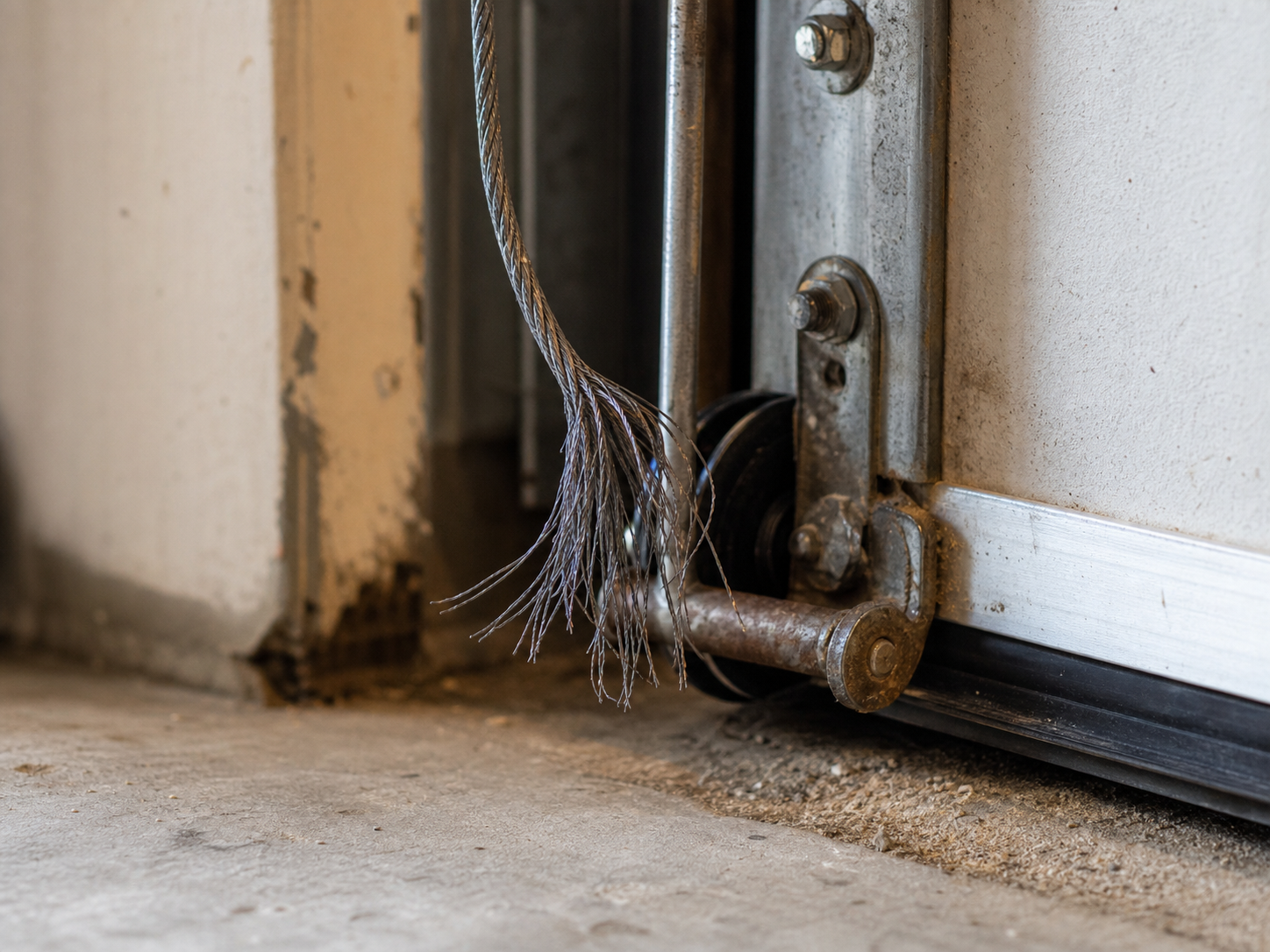
If you have already had the other cable replaced recently, or you noticed a bang from the garage during a cold snap, that fits the pattern too. Cables and springs take their worst beating in the freeze-thaw swings of a Midwest winter, when steel contracts hard overnight and the door is heaviest to lift.
Is it safe to use the door, or your car?
This is the question most homeowners in Lincoln Park and Lakeview actually call about, so we will be blunt. With a broken cable, stop using the opener.
Do not run the automatic opener on a door with a broken cable. A single failed cable dumps close to 100 percent of the door’s weight onto one side. That can bend the tracks, twist the bottom bracket, burn out the opener motor, or drop the door hard enough to damage whatever is under it. Including the hood of your car.
If your car is already parked inside and the door is down, leave it down and pull the car out through another route if you can, or wait for a technician rather than forcing the door. If the door is stuck open, do not stand under it and do not try to force it closed with the opener. A door held up by one good cable and one dead one is a door that can come down at an angle without warning.
The safe move is to disconnect the opener with the red manual release cord and leave the door where it is until it can be inspected. If you are not certain the remaining cable and spring are sound, treat the whole door as loaded and dangerous, because it is.
Why both cables get replaced, not just the broken one
When a customer sees one snapped cable, the natural instinct is to replace the one that failed and save a few dollars. We replace both, and here is the honest reasoning, not a sales pitch.
Both cables are the same age, the same steel, and they have run the same number of cycles side by side for years. If one frayed through, the other one is not far behind. It has the same rust, the same wear at the drum, the same fatigue. Replacing only the failed side buys you a service call today and a second failure in a few months, usually at the worst possible time.
There is a balance reason too. New cable and old cable stretch differently under load. Mixing a fresh cable with a stretched one throws the door out of even tension, which drags on the track alignment, wears the rollers unevenly, and makes the opener work harder than it should. Matched cables keep both sides pulling together. This is the same logic we lay out in our note on a snapped cable and Chicago repair costs, and it is why a fraying cable at the bottom bracket is a replace-in-pairs job, not a patch.
What a broken cable costs to fix in Illinois
Cable work is one of the more affordable garage door repairs, which is a small mercy. Here are the ranges we see across Chicagoland and the North Shore. Your final number depends on door size, whether a torsion spring or extension spring system is involved, and whether the drum or bottom bracket also took damage when the cable let go.
| Repair | Typical Illinois range |
|---|---|
| Single cable replacement | $150 to $225 |
| Both cables replaced (recommended) | $200 to $350 |
| Cable realignment (off-track, cable intact) | $125 to $250 |
| Emergency same-day add-on | +$50 to $100 |
Most shops, ours included, charge a service or diagnostic fee in the $50 to $95 range, and a fair one applies that fee toward the final repair cost rather than tacking it on top. If a technician quotes cables but also finds a spring at the end of its life, it is usually worth doing both in one visit so you are not paying a second trip charge two weeks later. You can see how we lay out flat, honest numbers on our garage door repair pricing page, and browse the kind of work involved in our Chicago garage door services.
What to do right now
If you are standing in the garage looking at a crooked door, work through this in order.
- Stop pressing the opener button. Every cycle on a one-cable door risks bending a track or the bottom bracket, which turns a $250 job into a much bigger one.
- Pull the manual release. Reach up and pull the red cord to disconnect the door from the opener carriage, so no one accidentally runs the motor.
- Leave the door where it is. Do not force it up or down. A door on one good cable is unbalanced and can shift hard.
- Keep people and cars clear. Do not park under a stuck-open door and keep kids and pets out of the bay until it is fixed.
- Call for an inspection. A technician will run a balance test, check both cables, the drums, the spring, and the tracks, and replace the cables in a matched pair.
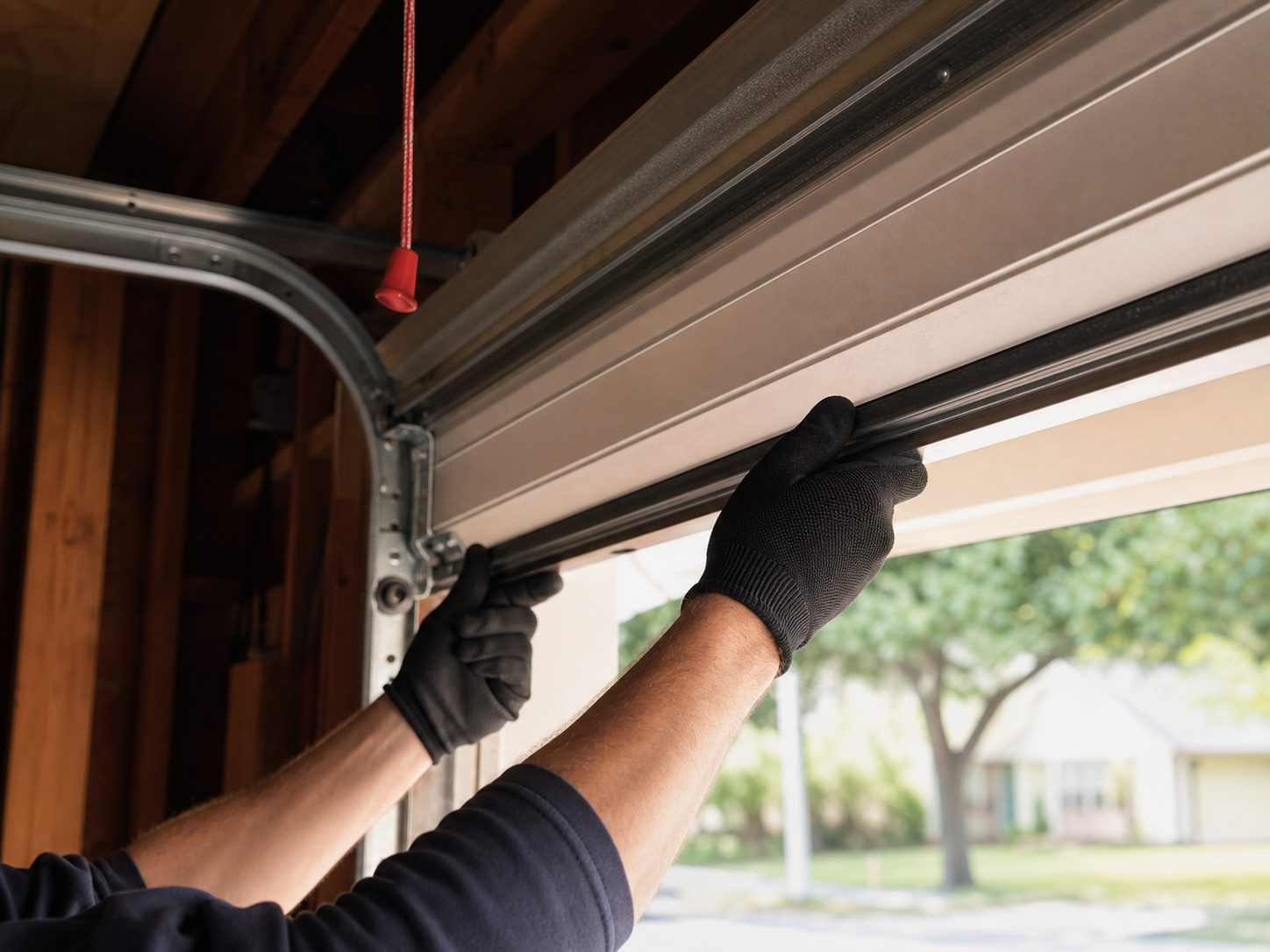
Cable replacement is not a good do-it-yourself project, even for handy homeowners. The cables share a system with springs under extreme tension, and if a cable or spring releases while you are working, the door can fall or the spring can whip loose with real force. Without proper winding bars and experience, the honest advice is to leave the tensioned parts to a technician. Swapping a garage door light bulb is a Saturday job. This is not.
Crooked door in a Chicago garage?
We cover the city neighborhoods and the North Shore, from the bungalow belt to Evanston and Oak Park. If your door is hanging low on one side, we will inspect the cables, drums, and spring and give you the number before we start.
Frequently asked questions
Can I still open my garage door manually if a cable snapped?
Sometimes, but you should not rely on it. With one cable gone the door is unbalanced and heavier on the failed side, so lifting it by hand puts strain on the remaining cable, the spring, and your back. If it moves at all it can also bind or drop suddenly at an angle. Pull the manual release, leave the door where it sits, and get it inspected before you try to move it again.
How long does a garage door cable replacement take?
For a standard residential door, a technician replacing both cables usually finishes in about 45 minutes to an hour and a half, depending on whether the drums, spring, or tracks also need attention. If the door came off track when the cable failed, or a torsion spring is also at the end of its life, plan for a little longer since those get corrected in the same visit rather than left half done.
Why do garage door cables break in Chicago winters?
Cold is hard on the whole system. Steel contracts overnight, grease stiffens, and the door is at its heaviest, so every lift asks more of aging cables and springs. Freeze-thaw cycles across a Cook County winter also accelerate rust where the cable meets the drum and the bottom bracket. A cable that was quietly fraying through the fall often gives out on the first brutal cold morning.
Is it worth replacing both cables if only one broke?
Yes, and most reputable shops will recommend it. Both cables are the same age and have run the same cycles, so the surviving one is usually close behind. Replacing only the broken cable saves a little now but tends to mean a second failure and a second service call within months, plus uneven tension that wears the rollers and tracks. Matched cables cost only a little more and keep the door balanced.
Cables are cheap, quiet, and easy to ignore right up until the morning they are not. If your door is hanging low on one side or you have spotted strands lifting near the bottom bracket, treat it as a repair to schedule now rather than a problem to keep cycling through. Read more from the Windy City Garage Journal for the rest of the common Chicago door failures and how to catch them early.
